
Service:
ADHD community support
Help your ADHD faculty learn, grow and connect together

Keep your ADHD faculty connected — and keep them
Your ADHD faculty members chose your institution for a reason. Their vision aligned with yours, and they want to deliver on that promise.
But without the right support, that ambition quietly turns into isolation. ADHD can make the already-solitary work of academia feel even lonelier — and isolated faculty disengage. They stop contributing. They stop feeling like they belong. And eventually, they leave.
The cost of losing a faculty member — in recruitment, in institutional knowledge, in departmental momentum — is significant. The cost of keeping them connected is not.
ADHD Community Support brings your neurodivergent faculty together in a weekly, facilitated group coaching programme. They reflect, share challenges, learn strategies, and set goals — together. What emerges isn’t just better writing habits. It’s the sense of belonging that makes faculty stay.
Table of Contents
The ADHD Community Support package
Investment: €10000 per semester, per cohort
A semester-long group coaching programme for 5–8 ADHD faculty members, facilitated by a specialist ADHD writing coach with five years of experience working exclusively with neurodivergent academics.
This is what’s included:
- Weekly one-hour group sessions throughout the semester (5-8 participants per cohort)
- A consistent, semi-structured format that builds trust and accountability across the group
- Peer-to-peer strategy sharing alongside expert facilitation
- Chat support between sessions
- End-of-semester summary report (if requested)
Do you have questions?
How this will help your institution
ADHD faculty don’t just need strategies — they need to know they’re not alone. When your neurodivergent faculty find their community, you gain:
- Higher faculty retention — connected faculty don’t leave
- Improved wellbeing and engagement — faculty who feel seen show up differently
- Stronger departmental culture — inclusion benefits everyone around them
- Reduced isolation and attrition risk — before it becomes a resignation
- Measurable progress with end-of-semester reporting
Your ADHD faculty will go from quietly struggling at the edges of your community to firmly embedded within it — contributing, collaborating, and thriving.
What actually happens in these sessions
Each session follows a consistent three-part structure that builds trust, accountability, and momentum over the course of the semester.
Part 1 — Reflection
Part 2 — Challenges
Part 3 — Goal-setting
Over the course of a semester, this rhythm builds something that ADHD faculty rarely experience in academia: a reliable, judgment-free space where their process is understood, their progress is celebrated, and their challenges are met with solutions rather than silence.
What this delivers for your institution
Improved retention
Faculty feel embedded in your community rather than peripheral to it
Reduced isolation
A structured space replaces the informal belonging that ADHD faculty often miss
Increased engagement
Faculty who feel supported contribute more actively to department life
Peer knowledge-sharing
Strategies circulate within the group, building collective capacity
Institutional credibility
A visible commitment to neurodivergent inclusion that faculty notice
Who this works best for
ADHD Community Support is ideal for institutions that want to:
- Support neurodivergent faculty proactively, before disengagement sets in
- Complement individual coaching or writing centre provision with peer support
- Build a more genuinely inclusive faculty culture
- Retain faculty who are productive but quietly struggling
It works best when participants have a confirmed or suspected ADHD diagnosis and a genuine interest in being part of a peer community. Participation works best when it’s chosen, not assigned.
What academics say about my coaching
Why me?
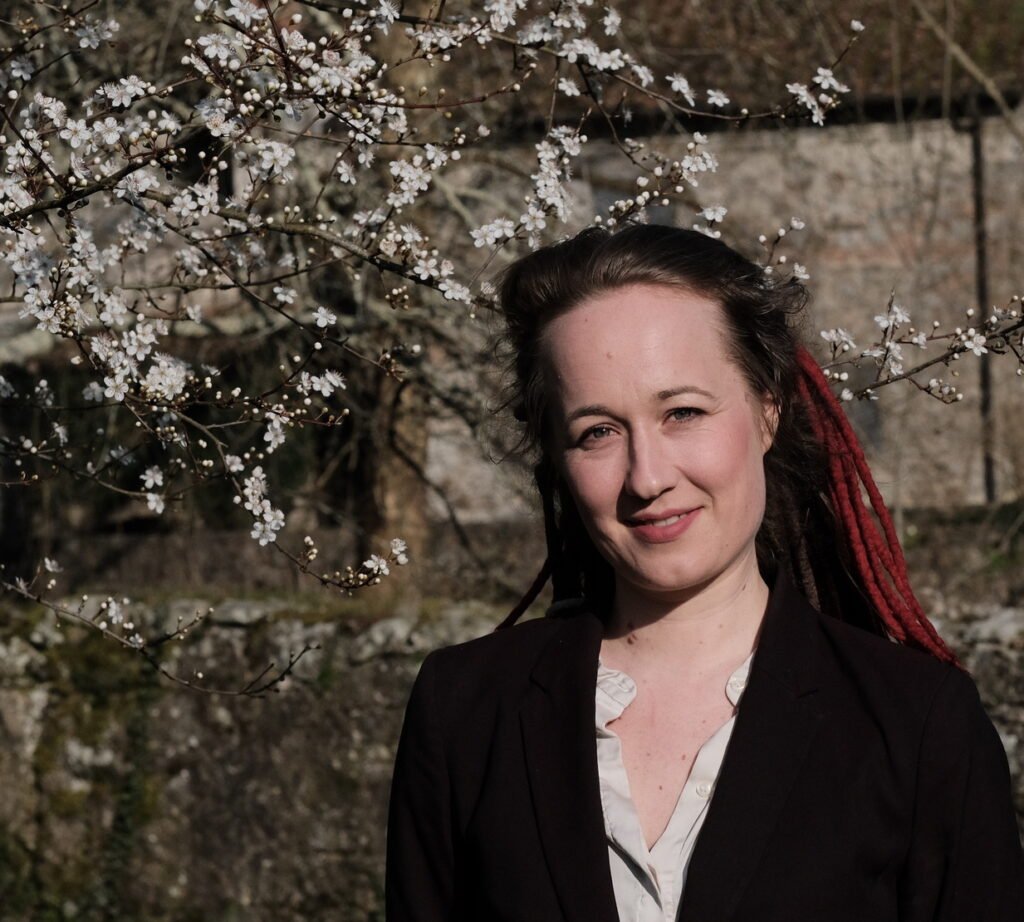
I’m the only ADHD writing coach who has spent five years working exclusively with ADHD writers. Since 2020, I’ve coached hundreds of writers, with academics consistently making up over 60% of my practice.
I understand:
- The neuroscience of ADHD and how to work with executive function challenges
- The specific demands of academic life — teaching loads, publication pressure, departmental politics
- How to hold group space in a way that feels safe for people who have spent years masking in professional settings
Group coaching for ADHD requires a different skill set than individual coaching. The facilitator has to manage multiple cognitive profiles, prevent the session from being dominated by the most talkative participants, and create conditions where quieter members feel just as held. That’s what I’ve spent years learning how to do.
Do you want to talk to me?
How this works
Working with me is easy.
1. You schedule a free 30-minute strategy call with me
We’ll discuss your institution’s specific situation, the faculty members you have in mind, and whether this programme is the right fit.
2. I send you a proposal & referral link
If we decide to move forward, you’ll receive a formal proposal including cohort logistics and institutional payment options. I’ll also send you a link you can share with your faculty members (either individually or in a broadcast email), so they can schedule their individual intake sessions with me.
3. Faculty members are onboarded
I’ll conduct brief individual intake conversations with each participant before the group begins — to establish trust, understand their context, ensure cohort fit, and assess availablity.
I’ll reach out to you if more than eight people want to join the cohort, to discuss the option of creating two different groups.
3. Coaching begins
We schedule the first session and start building the community your faculty deserve.
Frequently Asked Questions
What if some faculty members are skeptical about group work?
That’s common — and worth addressing in the intake conversation. Many ADHD academics have had negative experiences in group settings where they felt they couldn’t keep up or couldn’t contribute meaningfully. This format is designed differently. The intake conversation helps me assess whether someone is genuinely open to it.
How do you ensure quieter participants aren't drowned out?
The session structure is designed to give everyone the opportunity to share, particularly in the reflection and challenge sections. I actively facilitate to make sure no single voice dominates.
Can our institution sponsor a cohort for faculty who self-identify?
Yes — this is often the most effective model. Faculty who opt in are more engaged than those who feel directed to attend.
What if we only have 2–3 ADHD faculty members?
Cohorts need a minimum of 5 participants to function well as a community. If your numbers are lower, we can discuss running a cross-institutional cohort, or the Faculty Accelerator may be a better fit.
Can the two services run in parallel?
Absolutely. Some institutions use Community Support as a lighter-touch, cohort-wide offering while reserving the Faculty Accelerator for faculty with more intensive individual needs.
Give your ADHD faculty the community they need
Your neurodivergent faculty members don’t need to figure it out alone. They need a space where their challenges are named without judgment, their wins are witnessed, and their strategies are built alongside people who genuinely understand.
That’s what ADHD Community Support provides — and it’s what keeps them at your institution.
Let me build that community while you focus on everything else that demands your attention.